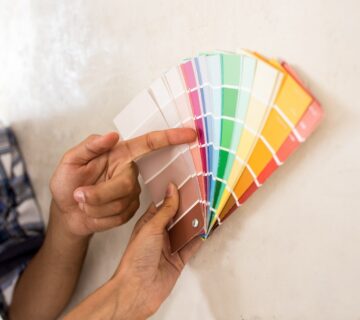

We’ve been painting for years and I’ve seen color trends come and go.
For example, accenting each room with a different color is “so 2008!” Nowadays, most clients prefer to create a better flow by choosing one main color and then adding complimentary, monochromatic or analogous color schemes in one to three colors, to add enhance the main color.
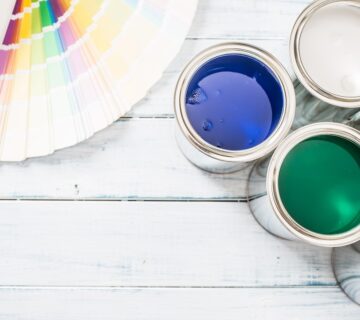
Color schemes are often described as combinations of colors on a color wheel. Different types of schemes include:
Monochromatic refers to colors which are different values ~tints or shades ~ of a single color. Monochromatic schemes are often used in modern architecture; though this is only one application of the scheme.
Analogous refers to colors which are adjacent to each other on the color wheel, often schemes found in nature and therefore naturally pleasing (familiar) to the eye. When using the analogous color scheme, one should select only one hue as the main color. Analogous color schemes can be a fun way to mix up colors while retaining a basic sense of the logical flow.

Complementary refers to colors which are opposite each other on the color wheel, and tend to create a more energetic look and feel. Complementary colors schemes can add a ‘pop’ if you a looking for ways to make your paint treatment stand out.


Some classic colors ~ white, gray, taupe, beige and tan ~ never go out of style, while others seem to trend up and down. Following are a few of the current trends.
Go Easy on the Red. Red dining rooms were the “it” thing a decade ago and now it can come across as dated. Painting a wall red makes creates a powerful and energetically heavy effect that fewer homeowners today are willing to live with on a daily basis. As a result, we’ve recently been painting over a lot accent walls and dining rooms! Don’t get me wrong… red is a fantastic color; actually one of my favorites. I especially like using bursts of red in décor ~ by adding pillows or other accents ~ to create an energetic ‘pop’ in the room, without going overboard.
Wall Color on the Ceiling. This was all the buzz five years ago, but it wasn’t really applied correctly. Typically, a room looks better when the ceiling is a lighter shade (or color) than the walls. However, when ceilings have irregular curves or lines, using a single color for walls and ceiling is a good way to minimize irregularities and improve the overall appearance and flow. This all-over color approach can be particularly effective in the case of vaulted ceilings, slanted walls, rounded corners or extra soffits. This same technique can effectively add drama in small spaces, such as bathrooms, when the same deeper or brighter shade is applied to the entire space. To finish the look, trim with a beautiful light tint, such as an off white, and accessorize with complimentary colors to add a beautiful dynamic.
Say NO to dull and muted colors. They are totally passé these days, which in my opinion is one of the best things to happen to color! For years, the most popular paint palettes featured a gray base, which felt dull from both a creative and energetic perspective. Crisp and clean colors have the opposite effect, lifting spirits along the way. I like the trend and have fun working with these color palettes. Even the grays I am choosing for my clients these days tend to be shades that evoke a feeling of clean and crisp, and energetic!
Trends in color may come and go… and then there are the classics. If your personality is such that you will very likely change your décor in a few years, don’t be afraid of being trendy. However, if you can’t stand home projects and the thought of painting makes your stomach turn; I recommend you choose a classic color palette that will serve you for a long time. Either way, remember that color selection is as much science as taste and, in the end, the most successful paint projects are accomplished with the help of a professional.
Ready to mix things up a little to create a classic look or take advantage of a current trend? Give me a call to schedule your color consultation… you’ll be so glad you did!
Until next time,
Nancy